











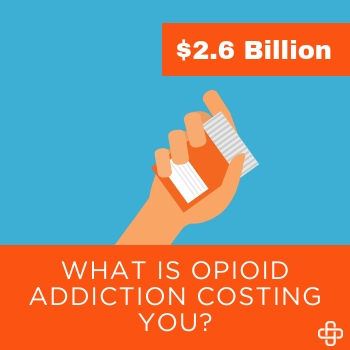
 The cost of opioid addiction for employers is rising, and it will continue to.
But don’t be fooled: employers aren’t the only ones to suffer – employees share the burden.
In this article, we’ll dive into what opioid addiction costs the workplace, and how employers can take control over this epidemic, before it takes over their workforce.
Are You Guilty of Opioid Ignorance?
Prescription narcotic use (otherwise known as opioids) has increased steadily since 1997. In 2010, “more people died from opioid overdose than died from cocaine and heroin combined.”
Controlling opioid addiction in the workplace is about keeping it real – and knowing what’s possible!
Here are some common attitudes that can contribute to workplace accidents:
- “It’s not my business if/what prescriptions my employees take.”
- “No one is overdosing at work. We don’t have a problem – do we?”
- “How does this epidemic affect my workplace?”
The truth is, over 42,000 workplace related deaths were caused by prescription painkillers. 21-29 percent of patients prescribed to painkillers admit to being addicted.
Your employees may be struggling with an opioid addiction in secret, and coming closer to a serious, (even life altering) injury by the day. If preventative measures aren’t taken, it will become a costly problem that can affect workers, production, and your overall bottom line.
Our call to action guide can help employers stop prescription drug addiction in the workplace, and protect workers from unnecessary injury.
A Call to Action Guide for Employers
One of the biggest misconceptions about painkillers is that it stops the pain and helps the injured worker to heal faster.
Many times, it causes the exact opposite. For example, workers who take painkillers for lower back pain report to heal three times slower than those who don’t take painkillers.
The following steps can improve employee health, and prevent painkiller addiction!
Supervisor Training
Supervisors should be mindful when a employee is injured and on medication. If you are told by an employee that he/she is taking a prescribed medication which may interfere with job performance, make the necessary accommodations to keep everyone safe.
Monitor their behavior at work, and be on the lookout for suspicious behavior.
Employee Education
Toolbox talks are a great way to educate and engage employees through best practice safety measures at work.
Design toolbox talks around seasonal, timely and relevant talks that will reduce their risk of injury.
Communicating the risks of opioid addiction and discussing natural remedies for pain medication are simple ways to have a healthier workforce on your hands.
Drug Testing
Opioid abuse is the same as illegal drug abuse. It’s dangerous, and it’s against the law.
Always remain cognizant of an employee’s changed behavior or poor judgement. If you suspect a worker is under the influence, take action immediately with a reasonable suspicion drug test.
Minimize Your Risk, Maximize Employee Safety
Not sure you need reasonable suspicion testing? Don’t be so sure.
Here are three reasons why:
- It can save a serious accident from occurring;
- It allows you to protect non-drug abusing workers from being in harm’s way, and keeps them safe at work;
- Allows an addicted employee to receive the help they need (before the problem becomes worse);
Our Occupational Health Programs and Incident Case Management Services provide a wide range of drug/alcohol employee testing services to maintain the well-being of your staff throughout their employee health journey.
We’ll determine the necessary testing required for your employee population, specific to your parameters, industry and objectives.
We’ll manage all aspects of your drug/alcohol program including the testing and reporting for:
- Reasonable suspicion/cause
- Return to Work
- Post-incident
Give us a call at +1 (877) 502-9466 to find out how simple a healthier workforce can become!